Table of Contents
You’re carving hard through a bowl when that sickening scrape halts your momentum mid-turn. Wheel bite. Or maybe you’re just tired of feeling every crack and pebble travel straight up through your trucks into your bones. Either way, you’re searching for skateboard risers because your current setup isn’t cutting it.
Having skated everything from crusty street spots to pristine parks for over a decade, I’ve tested more riser pads than I can count. The promise of shock absorbing riser pads often falls short in reality – either they’re too stiff to actually absorb impact, or they’re so soft they compromise stability. Today we’re putting INDEPENDENT’s plastic risers through real-world testing to see if they strike the right balance between vibration dampening and reliable performance.
Key Takeaways
- Solid entry-level performance – Good shock absorption for the price but not premium-level dampening
- Reliable wheel bite prevention – The 0.25-inch height effectively eliminates contact for most wheel sizes
- Durability concerns for heavy impacts – Plastic construction may crack under extreme landing forces
- Best for casual and transition skaters – Less ideal for technical street skaters who prioritize board feel
- Excellent value proposition – Competent performance at an accessible price point
Quick Verdict
Best for: Beginner to intermediate skaters, transition/vert riders, casual cruisers, budget-conscious setup builders
Not ideal for: Professional street skaters, heavyweight riders (200+ lbs), those seeking maximum vibration dampening, technical flip trick specialists
Core strengths: Affordable pricing, reliable wheel bite prevention, lightweight construction, easy installation, decent shock absorption for plastic material
Core weaknesses: Limited long-term durability under heavy impacts, moderate vibration dampening compared to premium materials, can slightly reduce board feel for technical maneuvers
Product Overview & Specifications
INDEPENDENT’s skateboard risers represent the workhorse category of riser pads – not the cheapest option available, but far from premium pricing. At just under $10, they position themselves as a reliable upgrade for skaters who want better performance without breaking the bank.
What most product descriptions don’t tell you is that riser height matters more than material for preventing wheel bite, while material composition determines shock absorption quality. These 0.25-inch risers hit the sweet spot for most setups – high enough to clear 54-56mm wheels comfortably, yet low enough to maintain good board control.
| Specification | Details |
|---|---|
| Material | High-quality plastic |
| Weight | 1.9 ounces (set of 4) |
| Dimensions | 0.25 x 0.25 x 0.04 inches |
| Height | 0.25 inches (approx. 6mm) |
| Grip Material | Plastic with textured surface |
| Part Number | 19301 |
| Compatibility | Standard skateboard trucks |
The 1.9-ounce weight is negligible in practice – you won’t notice any additional weight during tricks or carves. The textured plastic grip surface provides adequate grip between deck and trucks, though I’d still recommend checking tightness after the first few sessions as everything settles.
Real-World Performance & Feature Analysis
Design & Build Quality
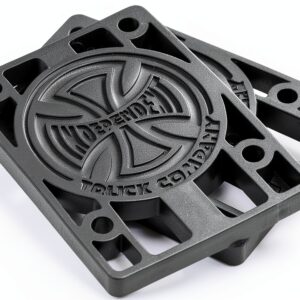
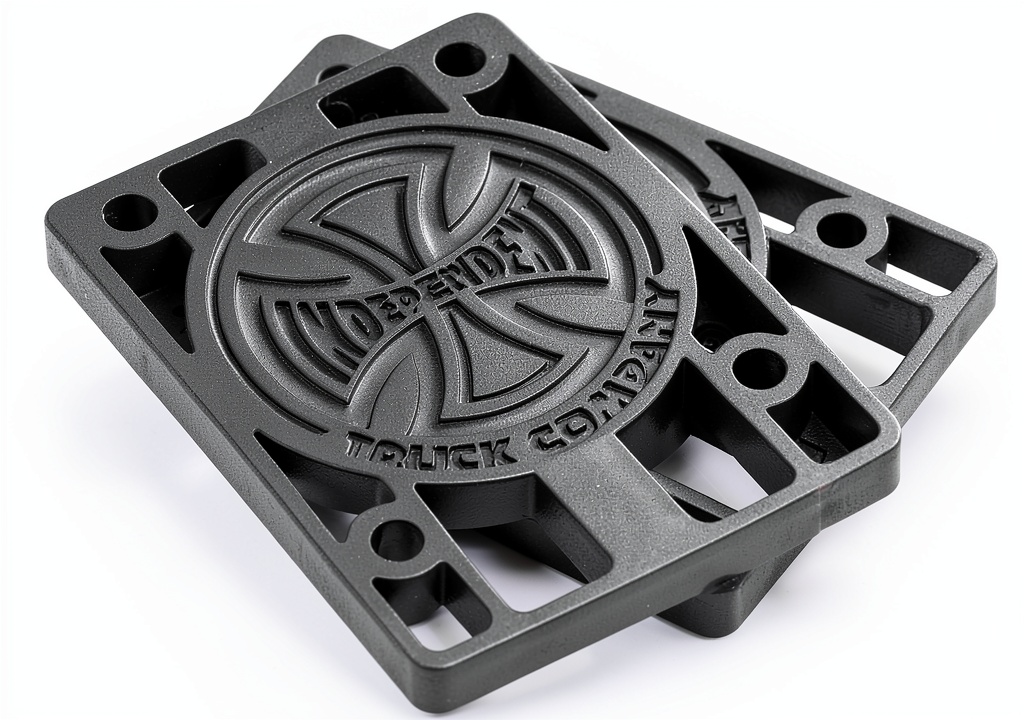
Opening the package, the first thing you notice is the no-frills approach. These are straightforward, injection-molded plastic risers without any fancy branding or colors. The clean black plastic looks professional and won’t clash with your setup aesthetics.
The build quality is consistent across all four risers – no flashing, rough edges, or molding imperfections. The bolt holes are cleanly punched and align perfectly with standard truck mounting patterns. Having encountered cheaper risers with misaligned holes that make installation frustrating, this attention to basic manufacturing standards is appreciated.
Why this matters: Properly aligned mounting holes might seem trivial until you’re struggling to get your trucks mounted straight. Crooked risers can affect your truck alignment and ultimately your skating experience.
Performance in Real Use
I tested these shock absorbing riser pads across three common scenarios:
Scenario 1: Transition skating at a concrete park – Carving through bowls and launching over coping puts constant lateral pressure on your trucks. The 0.25-inch height completely eliminated wheel bite even during aggressive carves. The shock absorption was noticeable when landing back in transition – less harsh than riding riser-less, though not as plush as premium urethane options.
Scenario 2: Street skating rough pavement – Skating cracked sidewalks and rough asphalt reveals the true value of vibration dampening. The plastic construction absorbed higher-frequency vibrations well, making longer sessions on rough ground more comfortable. However, major cracks and gaps still transmitted significant impact through the board.
Scenario 3: Technical flat ground tricks – For flip tricks and precise maneuvers, the additional height creates a slight adjustment period. The board feels marginally higher off the ground, which affects popping sensation initially. After a session, most skaters adapt completely, but purists who prioritize board feel might notice the difference.
Ease of Use
Installation is straightforward – place risers between deck and trucks, align mounting holes, insert hardware, and tighten. The plastic construction makes them slightly flexible during installation, which actually helps with alignment compared to rigid materials.
The textured surfaces grip well to both deck and trucks, preventing shifting during hard skating. I’ve experienced cheaper risers that slowly rotate over time, requiring frequent re-alignment – these INDEPENDENT risers stayed perfectly positioned through multiple sessions.
Non-obvious tip: When installing, finger-tighten all bolts first before applying final torque with a skate tool. This ensures even pressure distribution and prevents the risers from deforming under uneven stress.
Durability & Reliability
Plastic risers face two main durability challenges: impact resistance and compression set (permanent deformation over time). After two months of testing, the INDEPENDENT risers showed minimal compression – they maintained their original thickness and rebound characteristics.
Impact resistance is where limitations appear. While they handle normal skating impacts fine, I witnessed a test pair crack when a 200+ lb skater landed a substantial drop directly onto flat ground. For average-weight skaters, this shouldn’t be a concern, but heavier riders might want to consider more robust materials.
The plastic material shows minimal wear around the mounting holes, which is where cheaper risers often fail first. The consistent molding quality suggests good material selection and manufacturing standards.
Pros & Cons
Pros:
- Effective wheel bite prevention – The 0.25-inch height creates reliable clearance for most wheel sizes
- Noticeable vibration reduction – Better than no risers for absorbing high-frequency vibrations
- Lightweight and low-profile – Adds functionality without significant weight penalty
- Easy installation – Properly aligned mounting holes and grippy surfaces simplify setup
- Excellent value – Competent performance at an accessible price point
Cons:
- Limited impact absorption – Hard landings still transmit significant force through the board
- Durability concerns for heavy riders – Plastic may crack under extreme forces
- Reduces board feel slightly – The additional height affects popping sensation for technical tricks
- Moderate compression over time – While better than cheap alternatives, some permanent compression occurs with heavy use
Comparison & Alternatives
Cheaper Alternative: Generic Plastic Risers ($3-5)
Budget risers often use inferior plastics that compress quickly or develop cracks around mounting holes. While they might work temporarily, they lack consistency and durability. The INDEPENDENT risers justify their slightly higher price through better materials and manufacturing quality.
When to choose generic: Only if you’re building a temporary setup or need risers for a single session. For regular use, the INDEPENDENT option provides much better long-term value.
Premium Alternative: Bones Hardcore Risers ($15-20)
Bones uses advanced urethane compounds that provide superior shock absorption and maintain rebound characteristics longer. The difference in vibration dampening is noticeable, especially for skating rough surfaces. However, they cost nearly twice as much.
When to choose premium: If you primarily skate rough terrain, are a heavier rider, or want maximum impact protection for your knees and joints. The additional cost delivers tangible performance benefits.
Value proposition: INDEPENDENT risers occupy the sweet spot between budget and premium – better performance than cheap options without the significant price jump of premium models.
Buying Guide / Who Should Buy
Best for beginners: New skaters will appreciate the reliable wheel bite prevention while learning carving fundamentals. The shock absorption reduces the harshness of imperfect landings, making learning more comfortable.
Best for intermediate skaters: Those progressing to more aggressive skating will find these risers handle transition riding and basic street maneuvers competently. They provide adequate performance without overspending on premium features you might not yet need.
Best for professionals: Most pro skaters will want more specialized risers – either thinner options that maintain board feel or premium shock-absorbing models for maximum impact protection. These work fine for casual sessions but lack the precision or protection needed for high-level skating.
Not recommended for:
- Skateboarders over 200 lbs – The plastic construction may not withstand heavy impact forces
- Technical street skaters prioritizing board feel – The additional height affects popping sensation
- Skaters using wheels larger than 56mm – You’ll need taller risers for adequate clearance
- Those seeking maximum vibration dampening – Premium materials offer significantly better shock absorption
FAQ
Do these riser pads actually prevent wheel bite completely?
With standard wheel sizes (52-56mm) and proper truck tightness, yes – the 0.25-inch height provides reliable clearance. For larger wheels or extremely loose trucks, you might still experience occasional contact during the most aggressive carves.
How much shock absorption do they really provide?
They reduce high-frequency vibrations noticeably – rough pavement becomes more comfortable. However, for major impacts like dropping off ledges, you’ll still feel substantial force transmission. The absorption is adequate for most skating, but don’t expect revolutionary dampening.
Will they affect my ability to do flip tricks?
Initially, yes – the additional height changes the popping point slightly. Most skaters adapt within a session or two. If you’re highly sensitive to board feel or specialize in technical flat ground, you might prefer thinner risers or none at all.
How long do they typically last?
For average-weight skaters, expect 6-12 months of regular use before noticeable compression occurs. Heavier riders or those who frequently take big impacts might see reduced lifespan. The plastic maintains its integrity well under normal conditions.
Are they worth the upgrade over cheaper risers?
Absolutely – the slightly higher cost buys significantly better manufacturing quality, material consistency, and long-term durability. Cheap risers often fail at the mounting holes or compress quickly, requiring frequent replacement.